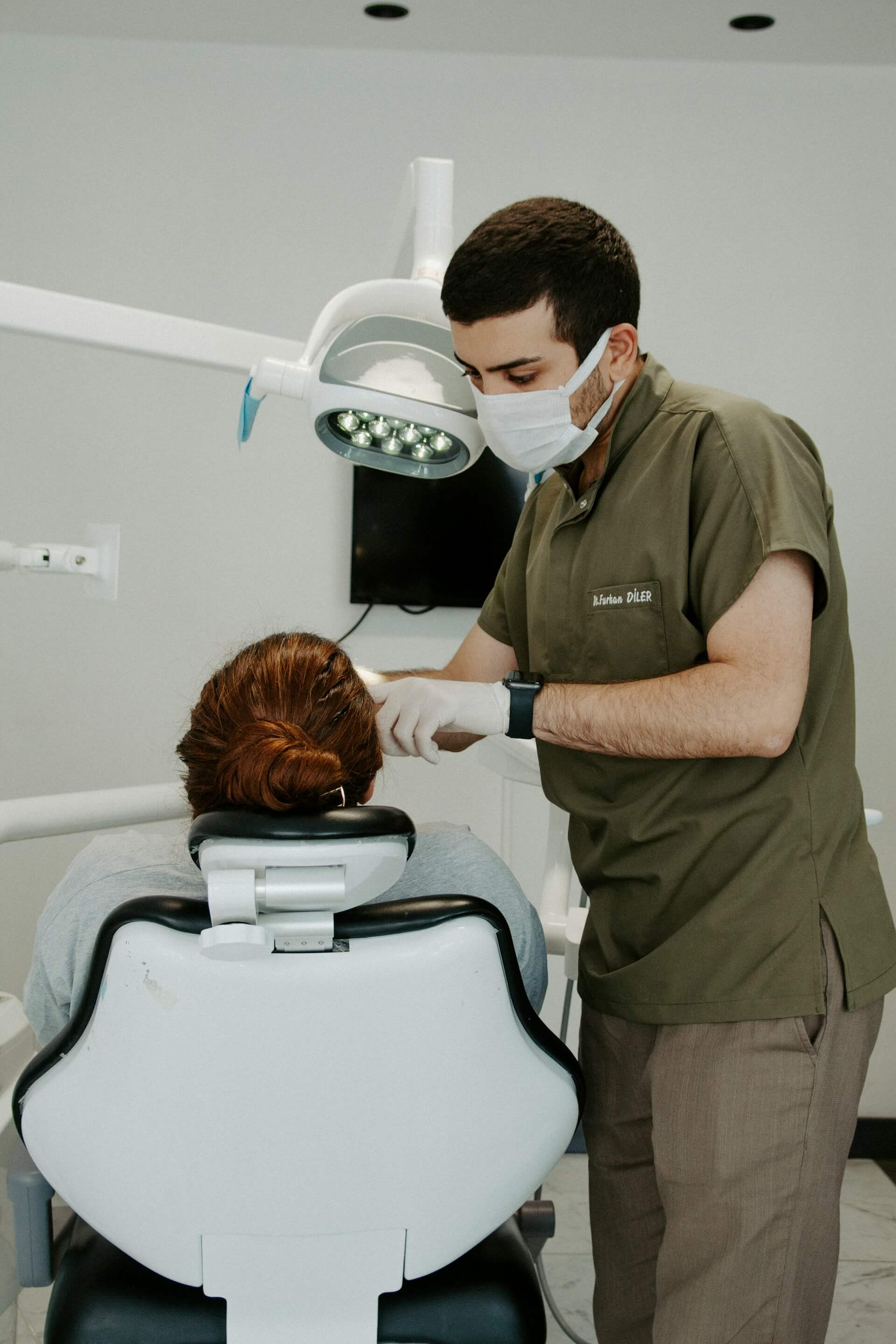
What is a dental impression?
A dental impression corresponds to the accurate reproduction in three dimensions of your patient's teeth, gums, and oral structures This “negative impression” is used as a matrix to manufacture perfectly adapted prostheses: crowns, bridges, orthodontic aligners or custom appliances.
The quality of the imprint directly determines:
- The Accuracy of adaptation future restorations
- The tightness of the margins (crown-tooth junction)
- The Masticatory comfort and the final aesthetic
- The sustainably of your prosthetic work
Historically, fingerprints were made using of hydrocolloids (alginate) for the study models, then precision silicones (PVS) for permanent restorations. While these methods remain proven and unavoidable, they require several manipulations (mixing, insertion, casting, shipping) and present risks of deformation, discomfort and handling errors.
Over the past few years, the 3D intraoral scanners offer a better alternative: fast optical capture, real-time visualization, digital archiving and direct flow to dental prosthesis laboratories.
This transition to digital technology optimizes deadlines, reduces retouching in the mouth and improves the patient experience, while opening the door to innovations such as artificial intelligence, augmented reality or “in-house” 3D printing.
Why take a dental impression?
The main indications
THEDental impression for crown remains the most frequent use, but the applications are multiple:
Fixed prostheses :
- Dental crowns (metal, ceramic, zirconia)
- Bridges to replace one or more missing teeth
- Inlays/onlays to restore damaged teeth
- Aesthetic facets
Removable prostheses :
- Full or partial dentures
- Implant-supported prostheses
Orthodontics :
- Alignment gutters (type Invisalign)
- Customized dental braces
- Post-treatment restraints
Implant surgery :
- Precision surgical guides
- Implant-supported prostheses
Fundamentals of dental impression
A dental impression accurately restores the morphology of the teeth and the soft tissues of the mouth. This reproduction is used as a basis for the planning of orthodontic treatments and the manufacture of dental prostheses.
To make a good dental impression, you must:
- Accuracy: The indentations must appear without burrs or bubbles to allow a perfect fit of the crown or inlay. Les occlusal furrows and the cusp topography must be faithfully reproduced in order to ensure harmonious occlusion.
- Solidity: The impression must not be deformed between taking and using it (casting or scanning).
- Clinical comfort and safety: The patient should tolerate the imprint without excessive gag reflexes or soft tissue trauma. All manipulations must respect hygiene and disinfection protocols to avoid any risk of infection.
Silicone dental impression: the traditional method
Alginate: economic technique for certain indications
THEalginate remains a material of choice for impressions that do not require maximum precision.
Main indications :
- Orthodontic study models
- Temporary prostheses
- Duplicate work templates
Simplified protocol :
- Choosing the impression tray : 3-4 mm overhangs around the arches
- Mix : scrupulously respect the manufacturer's dosage
- Quick insert : all at once, maintain pressure until completely set
- Firm disintegration : axial movement to avoid tears
- Immediate casting : less than 10 minutes to avoid deformation
Points of attention :
- Accuracy limited to ±100 µm (sufficient for indication)
- Fast deformation: it is imperative to pour under 30 minutes
- Very affordable cost: €5-10 per imprint
Silicone impression (PVS): the reference in fixed prostheses
Les precision silicones or polyvinylsiloxanes (PVS) represent the quality standard for all permanent restorations.
Double blending technique :
- Tissue preparation : gingival retraction by wire or laser if necessary
- Impression tray conditioning : application of specific adhesive
- First phase : injection of fluid silicone (light body) on preparations
- Second phase : loading dense silicone (heavy body) into the tray
- Simultaneous insertion : maintain pressure 6-8 minutes depending on the temperature
Recognized clinical benefits :
- Outstanding precision: up to 20 µm fidelity
- Excellent reproduction of details (furrows, fine margins)
- Dimensional stability over several days
- High tear resistance during de-insertion
Practical Considerations :
- Technique more demanding than alginate
- Material cost: €35-65 per complete impression
- Beware of powdered latex gloves (inhibit grip)
- Sensitivity to humidity during polymerization
Digital dental impression: the new technology
How do intraoral scanners work?
The digital impression is taken using a intraoral scanner. It allows you to create a model in three dimensions (3D) teeth and oral structures with great precision. The 100% digital flow reduces the risk of error and offers unparalleled patient comfort (non-invasive method thanks to laser technology).
The benefits of the digital footprint
Going to an intraoral scanner transforms the workflow and offers concrete benefits at each stage of treatment:
- Patient comfort & acceptability
- No more paste or unpleasant taste: a simple 2 to 5 minute sweep is enough.
- No more gag reflexes: phobic or sensitive patients appreciate a quick and non-invasive session.
- Micrometric precision
- Precision of 5—20 µm: margins, occlusal fossae and emergence profiles perfectly restored.
- Elimination of bubbles and deformations associated with the transport or casting of plaster.
- Productivity gain
- 50% reduction in appointment times: no more recovery sessions, no more patients treated.
- Elimination of mixing, casting and shipping steps: a direct “scan → CAD → CAM” workflow.
- Reliability & success rate
- Significant reduction in retouching in the mouth: numerical precision ensures a first successful test.
- Infinite archiving of fingerprints (STL files): no loss of model, always available to request again.
- Communication & collaboration with the laboratory
- Instant sharing with the prosthetist via a secure platform: 3D annotations, live video validation.
- Reduction of back and forth calls and telephone calls: the prescription is clear and shared in real time.
- Image & differentiation
- Valorization of the firm: communicate on high-end technology, reinforcing the attractiveness of the firm.
- Competitive advantage: a service perceived as more modern, fast and accurate attracts patients looking for excellence.
By combining these assets, the digital footprint becomes a driver of clinical quality, economic performance and optimal satisfaction—both for your patients and for your team.
Simplified surgical protocol for digital dental impression
Digital fingerprinting is characterized by its speed and precision. In less than 10 minutes, the practitioner can go from capturing the dentition to sending the virtual model to the laboratory.
Here are the essential steps:
- Preparation : clean and dry teeth and gums thoroughly to avoid artifacts.
- Digitization : using an intraoral scanner, scan systematically occlusally, lingual and then vestibular.
- Data assembly : the software builds an instant 3D model, visible on the screen.
- Live validation : check each margin and rescan the missing areas if necessary.
- Exporting : name the STL file and archive it in your patient database.
- Transmission to the laboratory : send digital impressions with a simple click via a secure platform for the manufacture of prostheses or devices.
The role of the intraoral scanner in digital impression taking
- Millimeter capture : records details and contours with an accuracy of 5—20 µm.
- Instant visibility : Identifies incomplete areas immediately.
- Patient comfort : no more paste, make way for a non-invasive scan of a few minutes.
- Continuous flow : integrates the 3D model directly into the CAD/CAM software of the dental prosthesis laboratory.
- Time saver : eliminates casting, transport and retouching, for a smooth workflow.
Adopting digital fingerprinting and its intraoral scanner means offering your patients a more comfortable procedure, improving the precision of your restorations and optimizing your team's time. It is the first step towards fully digital dentistry.
Quick comparison of 2025 intraoral scanner models
The best intraoral scanner models in 2025 are:
- 3Shape TRIOS 6
- Align iTero Element 5D
- Medit i700 Wireless
- Primescan (Dentsply)
Criteria for choosing an intraoral scanner :
- accuracy (5—20 µm)
- ergonomics
- Wiring vs wireless
- software compatibility (open systems)
- prizes
What is the relationship between the office and the laboratory?
Fluid communication between the practitioner and the laboratory is essential to transform an impression — physical or digital — into a perfectly adjusted prosthesis from the first delivery.
How does data transmission take place?
- Classic imprint
- Fast dispatch : ship the impression or plaster model the same day in a rigid box to avoid any deformation (alginate) or pressure.
- Laboratory sheet : always accompany your impressions with a detailed sheet specifying the color (VITA or other scale), the desired material, the type of prosthesis, the positioning of the contacts, and any particularity (lingual bite, interproximal space).
- Clinical photos : for complex cases (previous aesthetics, fillings), attach photos of the smile, the color in natural light, and the occlusal sections.
- Digital footprint
- Instant dispatch : transfer the STL/OBJ file in a few clicks via the scanner platform (3Shape Communicate, iTero link) or a secure cloud.
- Integrated annotations : use 3D marking tools to highlight critical areas (day in the trench, subgingival margin) or indicate recommendations directly on the numerical model.
- Video conferencing : some laboratories offer a live session to validate the 3D model together, discuss the margins or the emergence profile, thus avoiding back and forth and delays.
How much does the transition to digital fingerprinting cost?
Investing in the digitization of fingerprinting represents a significant cost, but operational and financial gains can quickly offset the initial investment.
What is the investment cost?
- Intra-oral scanner : between €15,000 and €40,000 depending on the range, wireless options and services included.
- Software licenses : €1,000 to €2,000/year for updates and support.
- Maintenance & consumables : annual maintenance, calibration, sterile or disposable tips, mattifying sprays.
- Formation : €1,000 to €3,000 for 2-3 days of learning, including practical workshops.
What are the returns on investment?
- Increased productivity
- Reduction of session time by 30—50% (scan < 10 min vs take + pour 15—30 min).
- Possibility to treat more patients per day.
- Reduction in retouching
- Micrometric precision: less retouching in the mouth, savings in time and material.
- Fewer reprints and additional appointments.
- Indirect savings
- Less shipping cost (less sending physical models).
- Reduction in the waste of impression materials.
How to finance the firm's digital transition?
- Leasing/leasing : spread the investment over 3—5 years, long-term purchase option.
- Lab-scanner partnerships : some dental laboratories lend the device in exchange for a minimum volume of orders; this is the case of H32 with whom you can get your scanner for free.
- Grants & regional aids : check the mechanisms to support the digital transformation of healthcare.
By combining these financing levers and by promoting savings and productivity gains, the digitization of dental impressions becomes a profitable and strategically essential project for any ambitious practice and professional.
FAQ: Your frequently asked questions about dental impressions
- What is the difference between alginate, silicone and digital printing?
- Alginate: fast and economical, average precision.
- Silicone (PVS): high precision, stable, higher cost and handling.
- Digital: patient comfort, micrometric precision, direct CAD/CAM flow, sometimes high initial investment.
- Is digital fingerprinting reimbursed?
- Digital fingerprints do not benefit from a specific reimbursement by Health Insurance, since they are a modern alternative to the classical technique. On the other hand, their cost is covered as part of prosthetic procedures (crowns, bridges) or orthodontic procedures, when taking an impression is part of an overall treatment.
- Digital fingerprints do not benefit from a specific reimbursement by Health Insurance, since they are a modern alternative to the classical technique. On the other hand, their cost is covered as part of prosthetic procedures (crowns, bridges) or orthodontic procedures, when taking an impression is part of an overall treatment.
- How much does an intraoral scanner cost and how long does it last?
- Between €15,000 and €40,000, with an average lifespan of 8—10 years subject to maintenance. Laboratories are setting it up free of charge.
- Between €15,000 and €40,000, with an average lifespan of 8—10 years subject to maintenance. Laboratories are setting it up free of charge.
- How do I keep and archive my fingerprints?
- Physical prints: plaster models stored away from humidity.
- Digital fingerprints: STL/OBJ files archived on a secure server, regular backups.
- Can I scan in the presence of metal implants?
- Yes, but applying a mattifying spray is often necessary to avoid reflections and improve capture.
- Yes, but applying a mattifying spray is often necessary to avoid reflections and improve capture.
- Digital fingerprints without teeth: is it possible?
- Yes. Intra-oral scanners also capture gingival and bone reliefs, allowing the design of complete prostheses without dental landmarks. For implants, digital guides are used that transfer the exact position of the implants and the intermaxillary relationships to the laboratory.
- Yes. Intra-oral scanners also capture gingival and bone reliefs, allowing the design of complete prostheses without dental landmarks. For implants, digital guides are used that transfer the exact position of the implants and the intermaxillary relationships to the laboratory.
- What are the benefits of digital fingerprinting for elderly or frail patients?
- Less time in the chair, essential for those with physical limitations.
- Elimination of imprint paste, reducing gag reflexes.
- Non-invasive method, ideal for chronic patients or patients with sensitive areas.
To conclude on the dental impression
Mastering dental impressions, whatever they are classical or numerical, is essential to guarantee perfectly adjusted restorations. By combining rigorous protocols, proactive communication with your laboratory and adoption of the latest technologies, you optimize your productivity, reduce rework and offer your patients unparalleled comfort and precision.
Ready to go digital? Discover H32 Dental solutions (intraoral scanners, CRM, dedicated training) and benefit from a personalized demonstration to propel your practice.

%20(1).jpg)
