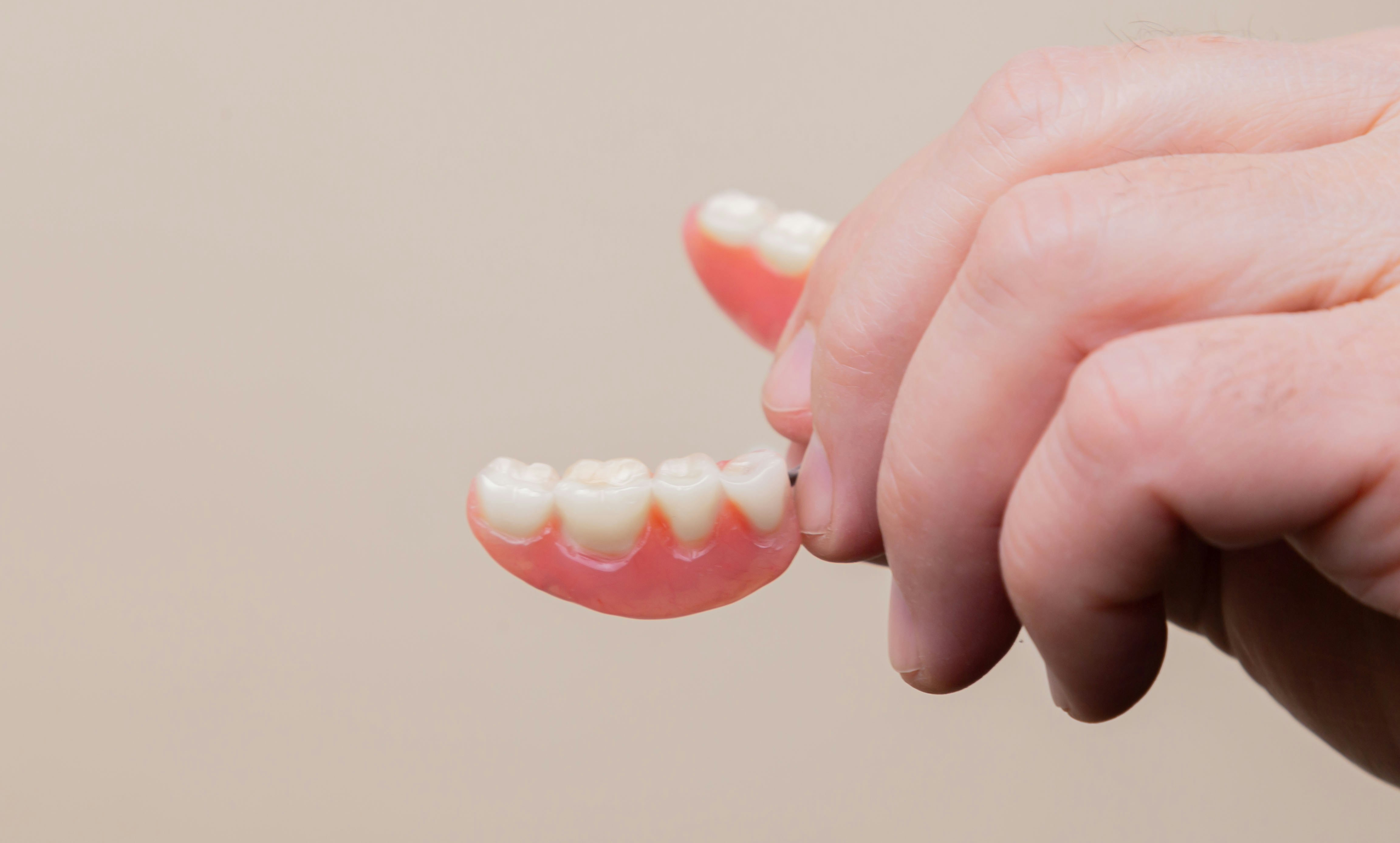
What is a Valplast dental prosthesis?
Valplast is a flexible removable partial prosthesis (PPA) made of thermoplastic polyamide. Unlike rigid dental stellites made of metal alloy (cobalt-chrome) or traditional acrylic resin plates, it is distinguished by its flexibility, her lightness and especially its gum-colored tinted hooks that make it almost invisible. For practitioners in the dental sector, it therefore represents an interesting alternative.
This guide is for dentists, prosthetists and coordinators who want to know the precise indications, the clinical protocol, the problems to avoid and the pricing of this solution.
Do you want to integrate Valplast into a 100% digital flow? Discover how H32 Dental solutions optimize your prosthetic chain with intraoral scanners and direct communication with laboratories.
Valplast flexible dental prosthesis: material and technical properties
How is a Valplast prosthesis made?
Valplast is a soft removable partial prosthesis made in polyamide resin (medical-grade thermoplastic nylon), shaped by injection hot. Its retentive hooks, integrated into the prosthetic base and tinted in gum color or pink, rely on both soft tissue and residual teeth (hence the term “gingivo-dental hooks”).
What are the properties of dental polyamide?
- Controlled flexibility : elastic memory allowing insertion/de-insertion without permanent deformation
- Low thickness : 1 to 2 mm base, reducing weight and reducing palatal or lingual congestion
- Excellent biocompatibility : hypoallergenic, total absence of metal and residual monomer (unlike some acrylic resins)
- Translucency : mimics the natural appearance of gum tissue
This flexibility improves immediate comfort and psychological acceptance, but reduces structural rigidity. In practice, this means that Valplast is more suitable for limited partial edentations where occlusal stability does not depend solely on the stiffness of the frame.
For whom is the Valplast prosthesis recommended?
When should you choose a Valplast flexible dental prosthesis?
Here is the list of cases where it is interesting to use a Valplast prosthesis:
- Anterior or limited partial edentations : replacement of 1 to 3 teeth in the cosmetic sector
- High aesthetic requirements : patients refusing any metallic element visible to the smile
- Metal intolerance or allergy : documented alternative for patients sensitive to nickel, chrome or cobalt
- Fine gums or fragile tissue : homogeneous distribution of forces, less traumatic than a poorly adjusted satellite
- Pronounced gag reflex : reduced weight and fine base limit palatine stimulations
- Long-lasting transitional prostheses : waiting for implants or extended periodontal treatments
- Soft periodontal splints : maintaining mobile teeth with improved comfort
When should you avoid a Valplast prosthesis? Contraindications
Here is the list of cases where it is not appropriate to use a Valplast prosthesis:
- Very resorbed ridges requiring rigid support : risk of instability and excessive tissue compression
- Severe Bruxism or significant occlusal forces : premature wear and deformation of the flexible base
- Extensive bilateral edentulas : lack of transverse stability, need for a metal frame
- Predictable need for frequent rebasing : complex and expensive rebasing techniques for polyamide
- Scalability with multiple anticipated additions : adding teeth to Valplast requires a specific laboratory protocol, which is less flexible than on acrylic
Specific cases to be evaluated on a case-by-case basis
- Elderly patients with reduced dexterity : flexibility can complicate insertion/de-integration (thorough demonstration required)
- Posterior edentals under heavy load : choose a stellite if intense bilateral chewing is required
- Combination with implants : possible for temporary implant-dental splints
What are the advantages of a Valplast dental prosthesis?
The main advantages of using a Valplast prosthesis are:
1. Superior aesthetics: The gum-tinted hooks blend into the tissue, making the prosthesis almost invisible to the smile, even at close range. Ideal for patients working in front of the public.
2. Immediate comfort : Featherweight (30 to 50% lighter than an equivalent stellite), flexibility and the absence of metal edges reduce the adaptation period. Many patients report an “oversight” of the prosthesis after a few days.
3. Tissue tolerance : Homogeneous mucosal support limits localized pressure points. Irritation associated with the rigid edges of a stellite is rare if the fit is correct.
4. Alternative to allergies : No allergenic metals or monomers: first choice solution for patients who document hypersensitivity.
What are the disadvantages of Valplast prostheses?
The disadvantages of using a Valplast prosthesis are:
1. Lower stiffness : Flexibility, which is an asset in terms of comfort, becomes a disadvantage in case of extensive edentulousness: the occlusion may be less stable, with parasitic movements during chewing.
2. Delicate repairs and rebasings : Unlike acrylic that can be repaired in a few hours in a chair or in the laboratory, polyamide requires a reinjection or specific gluing techniques. Rebasings are possible but more expensive and time-consuming.
3. Specific maintenance : Polyamide requires dedicated cleaning solutions (no abrasive toothpaste or very hot water) to avoid stains, porosity and discoloration.
4. Limited scalability : The addition of an additional tooth is feasible but involves a return to the laboratory with precise technical steps. To be anticipated during initial planning.
Valplast or stellite dental prosthesis: how to choose?
When is stellite better than Valplast?
Here are the clinical cases where it is best to use dental stellite:
- Bilateral edentulas or Kennedy Class I/II with multiple posterior sectors
- Need for maximum rigidity for stable occlusion under high masticatory load
- Predictable evolution with programmed tooth additions
In which cases is Valplast the best choice?
The Valplast solution is preferable in the following cases:
- Anterior sector with gummy smile : aesthetics take precedence
- Documented metal intolerance : no metallic alternative possible
- Anxious patients or with a history of rejection of metal prostheses: positive psychology
When does acrylic resin keep its relevance?
Clinical cases adapted to resin:
- Short transitional prostheses (<6 months) before implants
- Predictable multiple evolutions : saving time and cost
- Constrained budgets with standard mutual
How does the installation of a Valplast dental prosthesis take place?
The manufacture of a Valplast prosthesis generally follows a process in 3 appointments On approximately 10 to 15 days.
Appointment 1: Consultation and Dental impression
- Review and validation: Verification of the condition of the teeth and gums; evaluation of the occlusion (way of biting); explanation of the advantages, limitations and alternatives; detailed estimate with reimbursement simulation
- Impression taking: etraditional impression (alginate or silicone impression paste) or digital impression (recommended).
Appointment 2: Trying on the prosthesis
7 to 10 days after imprinting, trying on the temporarily mounted prosthesis: checking the aesthetics (position of the teeth, smile line); phonetics test (pronunciation of sounds); adjustment if necessary (shade, shape, length).
Appointment 3: Final pose
- Chair adjustments: Verification of the insertion and removal of the prosthesis; control of pressure points (with special paste); validation of the occlusion (balanced mastication); polishing of the edges to avoid irritation
- Practical learning: Demonstration of installation and removal; test with a food (cookie, fruit); delivery of a personalized maintenance sheet
How to maintain a Valplast dental prosthesis?
Polyamide requires specific maintenance to avoid stains, odors and deformations.
A daily routine in 3 steps
- Soft brushing with neutral soap (no toothpaste)
- Soak 10 min in a special Valplast solution
- Rinsing With lukewarm water (never hot)
After each meal Remember to rinse with lukewarm water. During the night, always remove the dental prosthesis to rest the gums and store it in a glass of clear water or moistened case.
The prohibitions that damage your Valplast prosthesis
- Toothpaste → scratches the material
- Boiling water → deforms
- Bleach → discolors
- Strong brushing → creates porosities
When should you see a dentist?
It is essential to consult a practitioner in case of:
- Persistent stains or odors
- Pain, gum redness
- Visible crack or prosthesis that moves
How long does a Valplast prosthesis last?
The average lifespan of a Valplast dental prosthesis is 3 to 7 years according to hygiene, chewing forces and regular follow-up.
Can a Valplast prosthesis be repaired?
The repair of a Valplast prosthesis depends on the following circumstances:
- Addition of a tooth : Possible but complex (return to the lab 3-5 days, cost 150-300€/tooth)
- Relining: Technically feasible but expensive (50-70% of the price of a new one). Often more profitable to redo a new prosthesis.
When should I switch to a dental prosthesis?
Consider a Stellite Or implants If:
- Loss of several other teeth
- Stability compromised despite adjustments
- Need for repeated rebasing
What is the price of a Valplast dental prosthesis in France?
How much does a Valplast flexible dental prosthesis cost?
Valplast rates vary according to:
- Number of elements replaced (1 to 6+ teeth)
- Design complexity (multiple brackets, palatine extensions)
- Region and type of office (urban/rural, mutualist/liberal center)
- Practitioner and laboratory fees
National order of magnitude :
- 1-2 front teeth : 600 - 900€
- 3-4 teeth (one-sided) : 800 - 1200€
- 5-6 teeth (extensive edentulous) : 1000 - 1500€
What is the reimbursement for a Valplast prosthesis?
The Health Insurance reimbursement basis for a PPA (Removable Partial Prosthesis) resin or metallic is approximately €195.65 in 2025 (CCAM code HBLD092).
AM refund : 70% of this base = approximately 137€
The remainder to be paid before mutual insurance is therefore substantial.
Is the Valplast prosthesis reimbursed by the 100% Health of Social Security?
The “100% Health” basket in removable prostheses mainly concerns:
- Prostheses acrylic resin foundational
- Some prostheses Metallic (stellites) meeting the criteria in the basket
Be careful, therefore, flexible PPAs such as Valplast are often OUT of the 100% health basket., which means:
- No comprehensive coverage even with 100% health insurance
- Significant expenses according to the specific mutual contract
How to properly communicate the price to the patient?
- Standardized quotation : mandatory, including CCAM code, SS base, fees
- Mutual simulation : contact the mutual insurance company directly to estimate the additional reimbursement
- Explanation “out of cart” : to clarify why Valplast is not in 100% Health (aesthetic choice/superior material)
- Alternatives : always present the stellite (metal basket) or resin (resin basket) prosthesis as fully reimbursable options
What are the mistakes to avoid with a Valplast prosthesis?
- Mistake 1: Choosing Valplast for an excessively extensive edentulous tooth
- Error : Offer Valplast for extended bilateral class I or II edentulous teeth.
- Consequence : Instability, parasitic movements, chewing discomfort, premature deformity.
- Prevention : Simple rule: Valplast optimal up to 3-4 unilateral teeth or 1-2 front teeth. Beyond that, choose Stelite or consider implants.
- Mistake 2: Inadequate hook design
- Error : Hooks that are too short (insufficient retention) or too long/thick (gum trauma).
- Consequence : Unstable prosthesis or recurrent ulcerations.
- Prevention : Precise communication with the lab (diagrams, photos), mandatory try-in testing to validate the supports.
- Mistake 3: Neglecting the functional footprintE
- Error : Simple anatomical impression on a mobile resorbed crest.
- Consequence : Unstable prosthesis, painful compressions, accelerated resorption.
- Prevention : Systematize the functional impression (border molding + fluid PVS) as soon as the fibro-mucosa can be moved.
- Mistake 4: Insufficient care instructions
- Error : Installation without demonstration or written maintenance instructions.
- Consequence : Plaque, stains, odors, porosity, deformations caused by hot water → dissatisfied patient and compromised prosthesis.
- Prevention : Systematic maintenance sheet, insertion/de-integration demonstration, non-negotiable J+7 control appointment.
- Mistake 5: Unclear communication about price and reimbursement
- Error : Announce “100% Health Possible” without checking Valplast's out-of-basket status.
- Consequence : Patient facing an unexpected burden, conflict, loss of trust.
- Prevention : Detailed estimate + mutual simulation BEFORE treatment agreement, clearly explain “out of basket” vs reimbursable alternatives.
Frequently asked questions about Valplast dentures
1. Can you have a Valplast prosthesis without a visible hook?
No, Valplast requires gingivo-dental hooks for retention. They are tinted gum color and almost invisible, but technically essential. A completely hookless prosthesis would require implant support (overdenture).
2. Valplast or stellite dental prosthesis: what to choose?
Aesthetics vs Stability. If previous sector with a visible smile: Valplast. If extensive edentulous, strong occlusal load or need for stiffness: stellite. The ideal: combine the two (stellite at the back, Valplast extension at the back, but at a high cost).
3. Can a tooth be added to an existing Valplast prosthesis?
Yes, technically possible but with constraints. The laboratory must perform surface preparation (sandblasting + primer), then localized re-injection or bonding with compatible resins. Delay: 3-5 days minimum. Cost: €150-300 per tooth added. If several dental losses are foreseeable, opt for a more progressive acrylic resin from the outset.
4. Can you sleep with your Valplast dental prosthesis?
Not recommended for hygiene and tissue rest. Removing the prosthesis at night allows the mucous membranes to regenerate and prevents bacterial proliferation. Possible exceptions on the advice of the dentist: patients at risk of swallowing or with ongoing aesthetic needs (rarely justified).
5. What products should I use to clean a Valplast prosthesis?
Polyamid dedicated solutions : Val-Clean, FDC Valplast Cleaner, or equivalents (10-15 min/day soaking). Economical alternative: diluted 10% white vinegar for weekly descaling. Absolutely to avoid : abrasive toothpaste, bleach, boiling water, aggressive brushing.
6. How long does a Valplast prosthesis last?
3 to 7 years on average, according to hygiene, occlusal forces and follow-up. Factors reducing the duration: Bruxism, neglected maintenance, extensive edentulous teeth (repeated bending). Prolonging factors: strict hygiene, semi-annual checks, limited edentulousness.
7. What should I do if I experience pain or irritation with Valplast?
Consult quickly (within 48 hours) for adjustment. Common causes: localized compression point, too long edge, unbalanced occlusion. Solution: selective grinding + polishing. If pain persists despite adjustments: reassess the indication (peak is too absorbed, Bruxism not detected).
8. Is the Valplast prosthesis reimbursed by Social Security and 100% Health?
SS refund : base ~€195 (70% = ~€137). 100% Health : Valplast often Out of cart = remains at significant expense even with 100% Health insurance. Alternatives reimbursed in full: stellite (metal basket) or acrylic resin (resin basket). Check specific mutual contract.
9. How long does it take to adapt to a Valplast prosthesis?
3 to 7 days for most patients. Adaptation phase: temporary hypersalivation, foreign body sensations, slight speech difficulties. Recommended exercises: reading aloud, gradual chewing (soft then hard foods), patience.
10. Can a Valplast prosthesis taste bad or smell bad?
No if maintenance is correct. Unpleasant taste or odor = sign of inadequate maintenance (plaque, tartar, colonized porosity). Solution: revision of the cleaning protocol, daily soaking, dedicated solutions, dentist consultation for professional cleaning. Persistence = replacement required.
11. Can you eat normally with a Valplast prosthesis?
Yes, with gradual adaptation. Start with soft foods (fish, cooked vegetables, pasta), then normal texture after 1 week. Avoid at first: very hard foods (whole nuts), very sticky foods (caramels), extreme temperatures. Flexibility can limit masticatory efficiency vs. rigid stellite.
12. How do I remove and replace a Valplast dental prosthesis?
Inserting : moisten, position on the intended axis, gentle and gradual pressure on both sides simultaneously. Withdrawal : smooth symmetric traction, no sudden lateral twisting. Mandatory practitioner demonstration in the pose + armchair training. Persistent difficulties = redesign the hooks.
Valplast dental prosthesis: our conclusion and recommendations
The essential things to remember about Valplast dental prostheses
Valplast flexible dental prosthesis represents a first choice aesthetic and comfortable solution For partial edentations limited and well selected. Its invisible hooks, its lightness and its biocompatibility make it the preferred option for aesthetically demanding patients or patients with metal intolerances.
Confirmed highlights :
- Impeccable aesthetics in the anterior sector
- Comfort and quick acceptance
- Validated alternative to metal allergies
- Lightness and delicacy appreciated
Limits to communicating well :
- Lower stability vs satellites on extended frames
- Specific non-negotiable maintenance
- More complex repairs/rebasings
- Significant expenses (excluding 100% Health)
Valplast dental prosthesis: an aesthetic solution under certain conditions
What to remember
The Valplast prosthesis represents the best aesthetic/comfort compromise to replace 1 to 4 teeth, especially in visible areas. Its invisible hooks and its lightness make it a solution acclaimed by demanding patients.
Key points for an informed decision :
- Ideal for limited previous edentations
- Validated alternative in case of metallic allergy
- Less stable than a satellite on extended indentations
- Mandatory specific maintenance (without toothpaste)
- Often out of the basket 100% Health (remains to be paid)
Valplast and digital technology
Les intraoral scanners are transforming the manufacture of Valplast prostheses: more comfortable impressions, increased precision and optimized communication with the laboratory. The digital flow reduces errors and delays.
H32 Dental supports your prosthetic project with complete digital solutions: latest generation scanners, direct connection to partner laboratories and continuous technical support.
Need advice on your case? Talk to an H32 Dental expert to assess whether Valplast fits your situation: Discover our solutions

%20(1).jpg)
